Search as you type.
Results while the customer is still typing, across the whole catalogue, forgiving of typos.
Solutions · Retail
You have a catalogue, a warehouse and customers. You get the shop — your domain, your brand, your data. We run everything behind it: the servers, the updates, the backups, the search, the images.
Who it is for
You sell over the counter and want the web shop to sell the same stock. Shop, warehouse and supplier stock each keep their own quantity — kept current by your till or ERP, through the API or a scheduled feed.
Stock per location · API · feeds
Every feature was another plugin, every update a risk. Here there is one admin and no plugins, we do the updates — and your old shop keeps selling until the switch.
One admin · no plugins · Switching →
Thousands of articles from supplier lists or your ERP — imported on a schedule, searchable as you type, photos turned into web images on their own. Proven with a catalogue of 166,000 parts.
Feeds · search · image pipeline
What every shop includes
The same complete set ships with every shop we run. Nothing on this list is an add-on, an upsell, or a plugin you have to pick.
The storefront
The part of the platform your customers see — on your domain, in your brand, fast on every screen.
Results while the customer is still typing, across the whole catalogue, forgiving of typos.
Mark an attribute filterable and it becomes a filter: size, material, colour — whatever your catalogue has.
Rendered on the server and cached at the edge, close to your customers.
Each photo in the size the screen needs, as WebP, from a CDN — sharp on a phone, light on the connection.
The admin
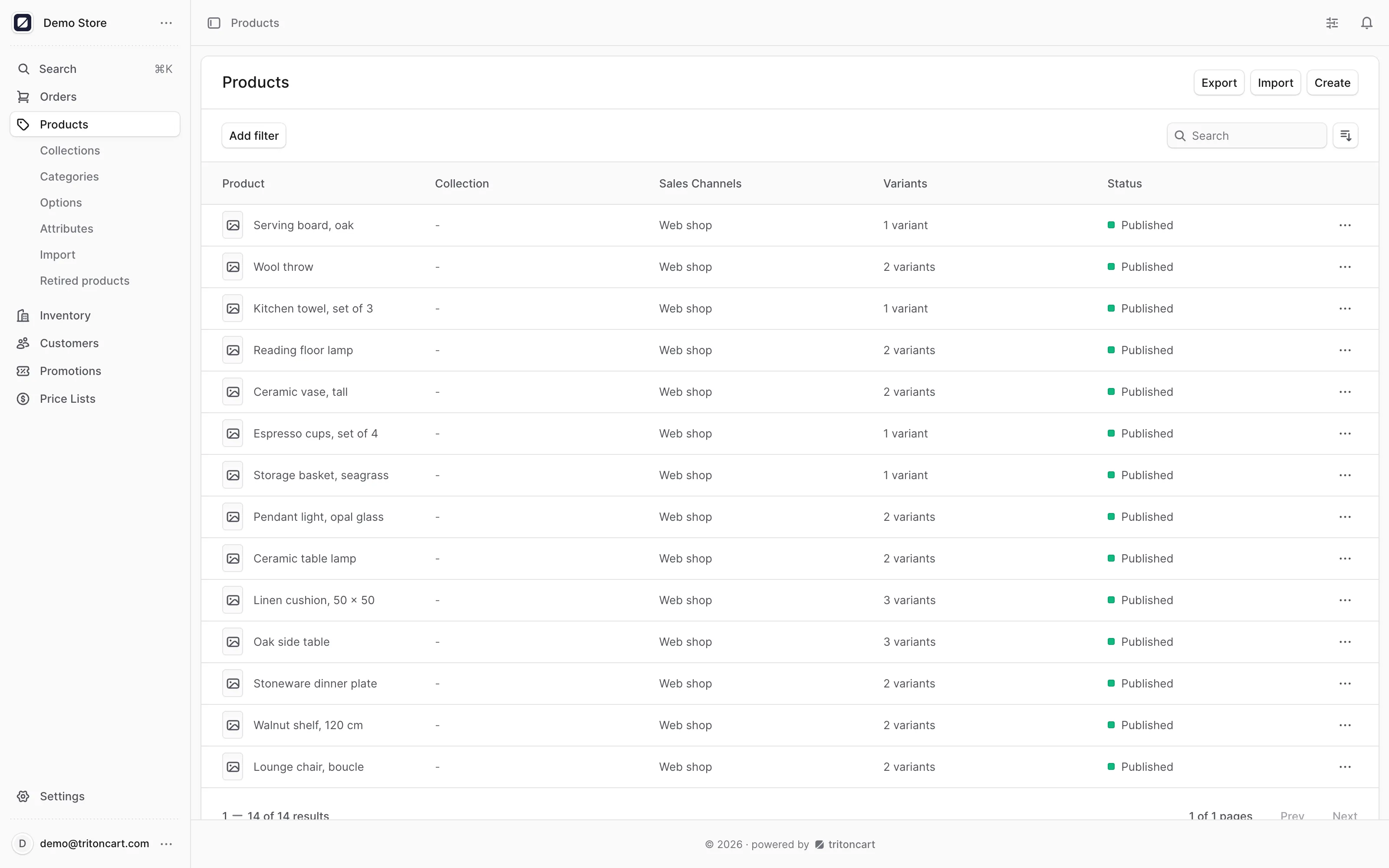
The catalogue, the orders, the customers and every setting live in one admin — the Medusa dashboard with our settings layer on top. No plugin zoo, no second dashboard for the feature you bought later.
Admin · Products
From your data to the web
Most shops do not start empty — they start with a supplier list, an ERP export or the catalogue of the shop you are leaving. That path is built, scheduled and reported on.
The same path runs every night without anybody pressing a button.
Selling, not configuring
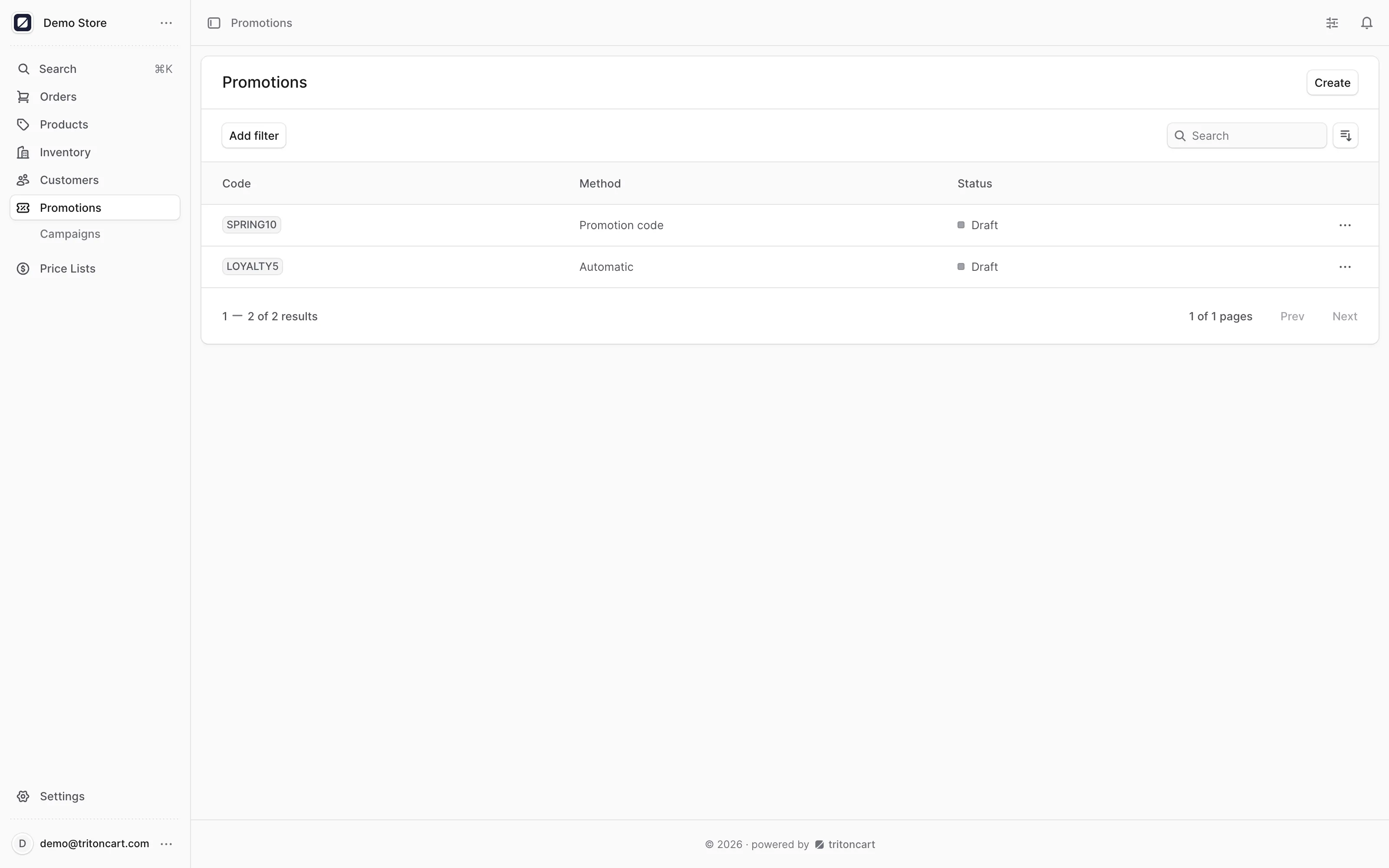
Percentage or amount, code or automatic, per campaign or per customer group — native, not a bolted-on module.
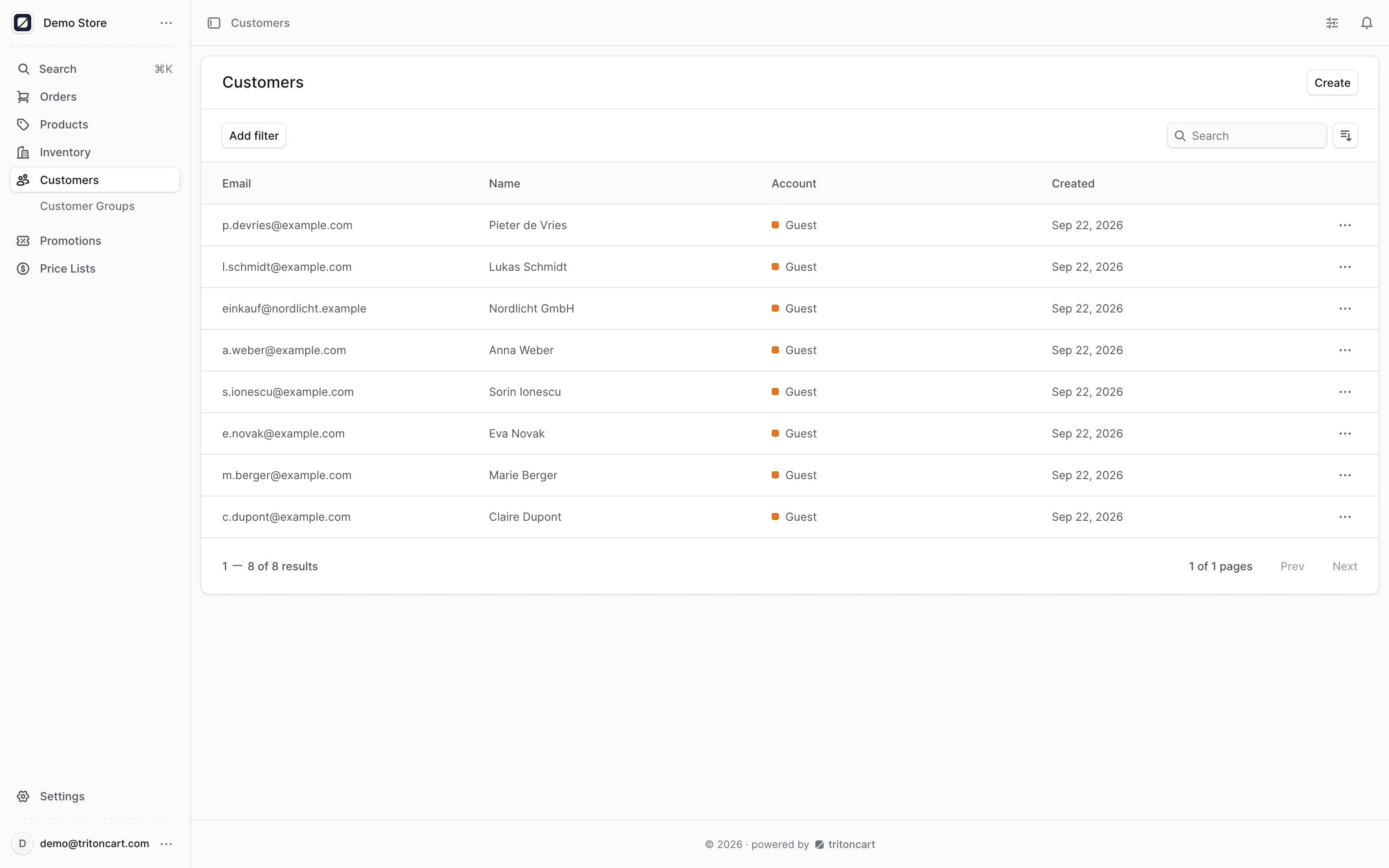
Accounts, groups and prices per group. A loyalty tier is a customer group with a rule, so it needs no extra software.
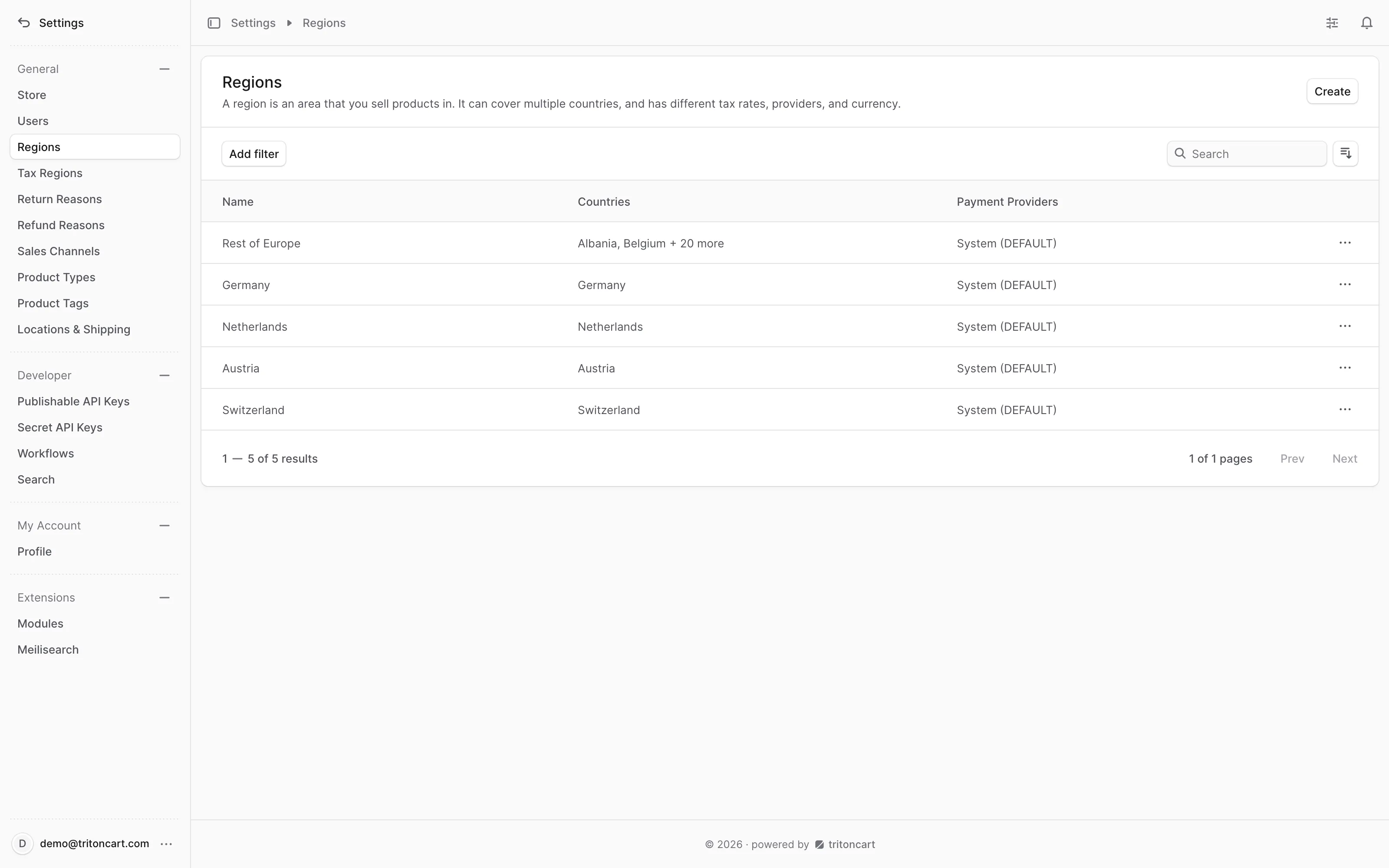
Countries, currencies, taxes and payment providers per region. Adding a market is adding a region, not a second shop.
Growth
One catalogue, several sales channels — your web shop, a second storefront, a trade channel — each showing the products you choose for it.
Consumers and trade customers from the same catalogue: every customer group has its own price list, and a trade customer sees their prices once logged in.
Prices per currency and region, sales with a start and an end, group prices — edited in one grid across all variants, or set by your feed.
Proven with 166,000 products and 480,000 photos on a single install. Your own dedicated server, upgraded as you grow; pages and images served from the edge.
What we run
The part you never see.
How we work
No bespoke builds, no hourly work. Every customer runs the same platform with different settings and modules — which is why an improvement for one shop reaches all of them, and why nobody is stranded on a version only they have.
We do not hand over the stack; we run it. What you own is the shop, the brand, the customers and the data — and the data leaves at any time, in open formats, because the platform underneath is open source.
Custom work becomes a module everybody gets, or it does not get built.
What it costs
Setup, once + a monthly price + a share of sales, when it fits
Some shops want one fixed figure a month; others a lower fixed part and a share that follows their sales — or only the share. The numbers depend on your catalogue, your markets and how you want to pay — so every shop gets its own offer.
Other solutions
Questions
Yes. The storefront runs on your own domain, in your brand; invoices, receipts and order mail leave from your own address, with SPF, DKIM and DMARC set up so they arrive. It is not a theme on someone else’s shop — it is your own dedicated install.
Yes. Consumers and trade customers shop from the same catalogue: every customer group has its own price list, and a trade customer sees their prices once logged in. Promotions and loyalty percentages can apply per group, too.
Yes — through the API and webhooks, or a CSV/XLSX feed on a schedule when that is simpler. Stock is kept per location (warehouse, shop counter, supplier), and every import run reports what it created, updated and skipped. Failed runs alert us, not you.
What you sell, how many articles, which markets, and what you run today. We come back with a scope and a price.